


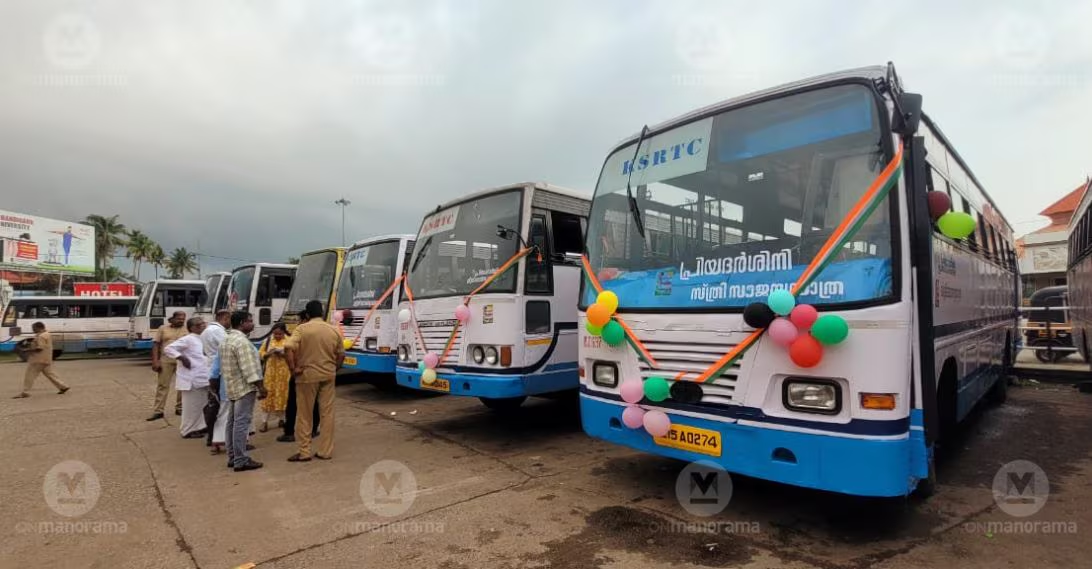
A Public Interest Litigation (PIL) has been filed before the Kerala High Court challenging the Kerala Government’s newly launched ‘Priyadarshini’ scheme, which provides free travel for women and transgender persons on Kerala State Road Transport Corporation (KSRTC) buses.
The petition, filed by the Centre for Consumer Education, Pala, seeks judicial review of the government order implementing the scheme under the State’s broader Indira Guarantee programme. The scheme came into effect on Monday and, in its first phase, offers free travel on KSRTC ordinary services.
According to the petitioner, the scheme was introduced without a comprehensive assessment of its financial, operational, or constitutional implications. It argues that granting fare exemptions solely on the basis of gender creates an arbitrary classification among public transport users, thereby violating the right to equality guaranteed under Article 14 of the Constitution.
The PIL further contends that the benefit is available irrespective of income, enabling financially well-off women to travel free of cost while economically disadvantaged male passengers continue to pay fares. The petitioner argues that this distinction lacks a rational connection to a legitimate welfare objective and cannot be justified merely as a special provision for women under Article 15(3).
The petition also highlights concerns regarding the financial burden the scheme may impose on both KSRTC and the State exchequer. It notes that the Kerala Government already provides approximately ₹120 crore per month to KSRTC, ₹50 crore as operational assistance and ₹70 crore towards pension liabilities, amounting to nearly ₹1,440 crore annually for the operation of around 4,000 buses.
With the introduction of the free travel scheme, the petitioner argues that the State will be required to compensate KSRTC for the loss of fare revenue from women passengers, resulting in a substantial recurring financial liability.
The PIL also points out that women who rely on private buses on routes not covered by KSRTC are excluded from the benefit, leading to unequal treatment among similarly placed commuters. Additionally, it argues that restricting the subsidy to KSRTC services gives the state-run corporation a commercial advantage over private operators, potentially distorting competition in the transport sector.
The petitioner further alleges that the Government failed to conduct any impact assessment, expert evaluation, or stakeholder consultation before implementing the policy. It claims that the decision was driven primarily by an electoral promise rather than a structured and evidence-based public policy process.
(With LiveLaw inputs)