

“Don’t you remember, Philip Sir, how massive the protest at Kurishupally Junction was?” asks Dr Raju D Krishnapurath.
Philip Thomas Madathil barely needs a moment to recall it.”How could I forget? The whole community came together to save the Meenachil River. We proved that when senior citizens decide to do something, they can make it happen.”
For Philip, that protest was just one chapter in a journey that began in 2012, when a newspaper announcement in Malayala Manorama introduced him to Saphalam 55 Plus. Launched by Dementia Care Pala, a voluntary organisation that has, since 2004, helped older adults overcome loneliness by leading active, purposeful lives, the initiative immediately struck a chord with him. Today, he serves as Vice President of Meenachilar Punarjani, Saphalam’s environmental wing.
Philip’s story is far from unique. Every member of Saphalam has a personal journey that led them to the movement. Together, they have evolved into what is fondly known as the “55 Plus Army”, a network of senior citizens whose activities range from distributing books to schoolchildren to spearheading public campaigns for environmental conservation.
At a time when Kerala has set up a dedicated Department for Senior Citizens, Saphalam, headquartered in Pala, offers a compelling model of community-based elderly welfare that deserves to be replicated across the State.
So, how did this unique movement take shape?
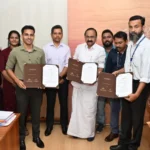
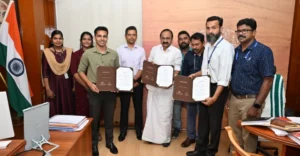
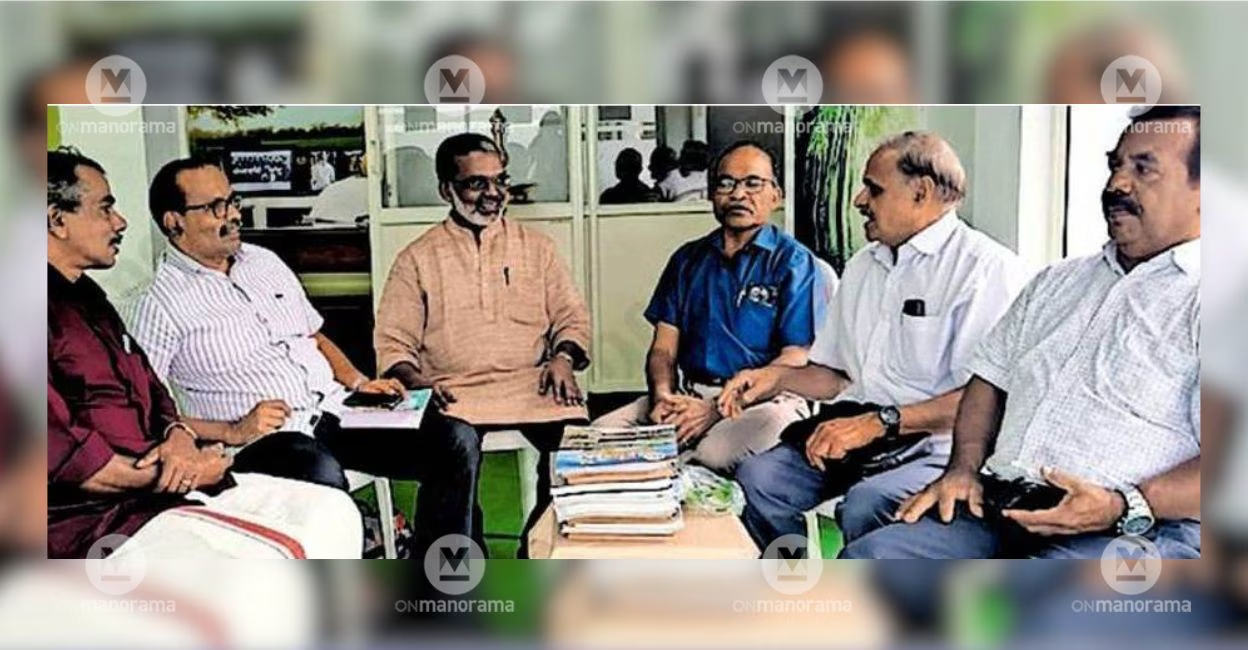
D Shubhalan, Treasurer of the Ramapuram Unit; Baby Thomas Pampara, the founding President of the Bharananganam Unit; P M Mathew, President of the Bharananganam Unit; and K V Sajimon, Secretary of the Bharananganam Unit, who have been among the driving forces behind Saphalam, recount the story of a movement that transformed retirement into a new beginning.
Stage 1
The journey began with a one-day seminar on dementia, where experts explained that patients often pass through stages of delirium and depression before developing the condition. The deliberations concluded that encouraging older adults to remain mentally and physically active could help reduce the risk of cognitive decline.
Stage 2
The organisers then enlisted National Service Scheme (NSS) volunteers to conduct a survey . The survey collected details such as the number of residents above 60 years of age, their health conditions and employment history. One of the key findings was that 60–70 per cent of those affected by dementia had once enjoyed a stable source of income. The survey also reinforced the belief that maintaining good physical and mental health could help delay or even prevent the onset of dementia.
Stage 3
The survey culminated in a meeting attended by 167 senior citizens from across Meenachil taluk. Members were divided into groups based on their interests and expertise in areas such as healthcare, agriculture, policing, electricity, education, environment and counselling etc. Each group elected a convener and the initiative was subsequently named Saphalam 55 Plus.
Stage 4
To keep members connected, the organisation began publishing a monthly tabloid carrying updates on Saphalam’s activities along with the contact details of its members. Before long, senior citizens started reaching out whenever they needed assistance.In the process, an initiative conceived to prevent dementia blossomed into a community that enriched the social and emotional well-being of older adults.
Meenachilar Punarjani
A complaint from local residents in 2013 about waste being dumped into the Meenachil River by a hotel in Pala marked Saphalam’s entry into environmental activism. Under the leadership of its patron, Mar Joseph Pallikaparambil, members staged a hunger strike at Kurishupally Junction, forcing the authorities to act against the hotel. The agitation gave birth to Meenachilar Punarjani, which subsequently expanded its reach to schools by setting up Punarjani Sena units.
Senior Citizens for Children
Bharananganam is where Saphalam has made its strongest impact. Its association with local schools began with the distribution of utensils and books to students, but the initiative has since grown to include literary competitions and other activities.The sustained engagement has also contributed to an increase in enrolment in government schools. The organisation also extends legal assistance to senior citizens.
The Bharananganam unit has around 70 active members, who meet every month to review their work and plan future activities. Saphalam runs entirely on a self-help fund contributed by its members. With no external financial backing, limited resources remain one of the organisation’s biggest constraints.
A department alone won’t do
Members of Saphalam believe that creating a dedicated Department for Senior Citizens is only the first step. They suggest several measures to promote active ageing across Kerala:
1. Every panchayat should establish a common space where senior citizens can meet, interact and organise activities.
2. Local self-government institutions should take the lead in convening meetings of senior citizens and facilitate the formation of non-political, non-religious community groups on the lines of Saphalam.
3.The experience and expertise of senior citizens should be utilised in areas such as community policing and other public service initiatives.
Know of a similar initiative in elderly welfare? Write to Nallaprayam with details of the initiative. Don’t forget to include your name, phone number and location.