


[ad_1]
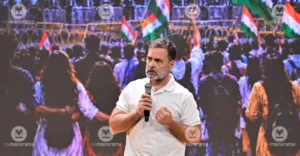
Editor of news portal Wire Seema Chishti on Friday said that the ‘big media’ had effected a “vibe shift” after the Jantar Mantar protest but warned that more than newfound concern, this was an attempt to infiltrate the Gen Z world through Instagram and attack from within.
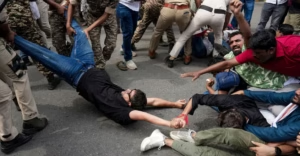
“There has been a little bit of a vibe shift, as in they acknowledge that something is happening,” Chishti said while delivering the 25th annual N Narendran Memorial lecture on the subject ‘Media Beyond Jantar Mantar’. As an example, she said that the news agency ANI’s tweets did not have anything about the suffering of students in the first 24 hours of the protest (July 20).
“From complete absence, from pretending that it has not happened, from pretending that it is just a labour unrest that is easily ignored, from just don’t show it, to now being shown,” Chishti said. But she suspects that the “vibe shift” was just an attempt to adopt Gen Z tools to beat them at their own game.
“They want all their journalists to get into Instagram, and they are using strange language not realising that Gen Z has already dropped words like ‘rizz’ that oldies have started using,” she said. ‘Big media’ has realised that the TV format will not work anymore and they want to take what she called “new propaganda artists” on board.
“So like Mr Modi’s reels (the two Insta selfies the PM had put out in the aftermath of the Cockroach protests), there is a bad attempt to pretend that they are Gen Z. They are trying to use their language and trying to infiltrate through Instagram,” Chishti said.
The results can be comical but also catastrophic in the long term. “The amount of bans that are happening on Instagram is absolutely crazy. It’s a wild way of suppression,” the former BBC India chief said.
This is a new but destructive form of erasure. “What is memory but what you read and what you google. Stuff is taken off the net, which means there is less available to analyse. Five years from now you will have a completely different reading of what happened in the protest,” Chishti said.
Already the ‘big media’ is reconfiguring the conversation around the Jantar Mantar protests. According to her, the ‘big media’ had never reflected life. In the period between 2014 and 2024, 1.23 lakh students had died by suicide citing exam failure and family problems. In the same period, 94,000 government schools were shut down across the country at the “insane rate” of 25 schools per day. “But all is well if you watch TV,” Chishti said.
And now, even when they are roaming hunter-like through Instagram, they are not reflecting life. She recalled a recent news story headline ‘ISI-backed module in Punjab is waiting to come to Jantar Mantar’. “This is no small story. In three weeks’ time, as part of its narrative building, it will be said that this was a much larger module, with multiple nodes and that everyone involved would be picked. Apart from demonising protestors, calling them people with criminal antecedents, the government is trying to undermine a protest that is not centred on identity,” Chishti said, and added: “They are effectively trying to reshape the conversation around the protest.”
This lack of a core identity for the Gen Z protests, like in the case of the Citizenship Amendment Act (CAA) protests, Chishti said, had scared the BJP. “It is unlike the CAA protests. The CAA contested the BJP on its polarisation agenda. The Gen Z protest is different in that it embraced all identities but did not centre one identity, like Muslims in the case of the CAA protests. And this scares the BJP,” Chishti said.
Emotions getting attached to education have also alarmed the ruling dispensation. “Till now education and health concerns were not emotive subjects. Now emotion has got attached to it. There are kids committing suicide,” Chishti said.
Just because the disaffection with the BJP is palpable or the Centre’s nose has been punched in these Gen Z protests, Chishti said that the ‘big media’ should not be expected to switch sides. It would still stand by the ruling party. “It is only 36 per cent that voted for the BJP in 2026. The remaining 76 per cent are left untended,” she said.
There is a reason why the ‘big media’, even if they are motivated by money, will not bother to cater to this 76 per cent majority. “The ‘big media’ houses are not run by random rich men like in earlier times but by the biggest businessmen of Asia who are best friends with the ruling regime and who are getting the best possible treatment by the BJP’s economic policy,” Chishti said.
[ad_2]
Source link