

[ad_1]
Dunche (Nepal): Rasuwa, on the Tibetan border, is one of Nepal’s two worst flood-hit districts. Since reaching Kathmandu, we had been trying to get there, only to be forced to turn back repeatedly by roads washed away in the floods.
The first stop was Dunche, a village perched high in the mountains of Rasuwa, from where we could travel to several places along the Bhotekoshi river. With the main road to Dunche washed away, an alternative route has been opened. Used mainly by farmers from interior villages to ferry their produce to the town, the track sees little vehicular traffic.
Once the route was confirmed open, finding a vehicle became the next challenge. Several drivers backed out, wary of the flood-hit terrain. Finally, Om Bahadur Tamang, a native of Nuwakot, agreed to take us. We left Kathmandu at 1am, asking how long it would take to reach Dunche. “Five to six hours,” he replied, though he was not certain. He had never travelled along the newly opened route.
The alternative route begins at Bidur in Nuwakot. The 42 km stretch from Bidur to Rasuwagadhi on the border has virtually disappeared, with all 41 bridges along the way washed away, leaving several villages cut off.
It did not take long to see the extent of the damage. Soon after joining the new route, the freshly laid road gave way to a half washed track. As the car edged cautiously along the remaining stretch, we instinctively shut our eyes. We finally breathed a sigh of relief after somehow making it across.
But the relief was short lived. The tarred road soon disappeared altogether, replaced by a treacherous mix of rocks, earth and mud. The car lurched from rock to rock before plunging into the slush. This was the only road now.
Passengers from the vehicles behind got down to help push trucks stuck in the mud. One by one, the vehicles began inching forward. Volunteers stayed with the convoy, using walkie talkies to alert those behind about dangers and obstructions ahead.
As we passed each village, the same question kept returning: How much longer? But there was never a clear answer. Dunche still seemed a long way off.
Around 7pm, the rain returned. As the downpour intensified, the entire convoy came to a halt. Soon, word came that another truck a little ahead had a tyre stuck in the mud. We waited in the car for nearly an hour, hoping the road would clear. But it soon became clear that there was no way forward. We approached a farmer’s house in the village and, after speaking to the family, sought shelter there for the night.
The next morning, rain was still lashing the area, and for a while, we feared we might have no option but to turn back. When it eased, we resumed the journey at 6.30am. But barely had we travelled for a while when we were forced to stop again. The axle of a truck had snapped a little ahead, blocking the route for smaller vehicles. Eventually, the trucks moved aside, allowing jeeps and other smaller vehicles to pass.
In several places en route, the scars of landslides from the previous night were visible. Government earthmovers had been deployed in many villages along the route, helping clear debris and reopen the road quickly. The 120 km journey took more than 15 hours. Reaching Dunche at 12.30pm, after more than 15 hours on the road, came as a huge relief.
Voluntary organisations, including the World Food Programme and the Red Cross, were on the ground distributing food and drinking water. They said several villages were facing the threat of disease outbreaks. Government officials said work had also begun to make temporary repairs to the damaged roads and bridges.
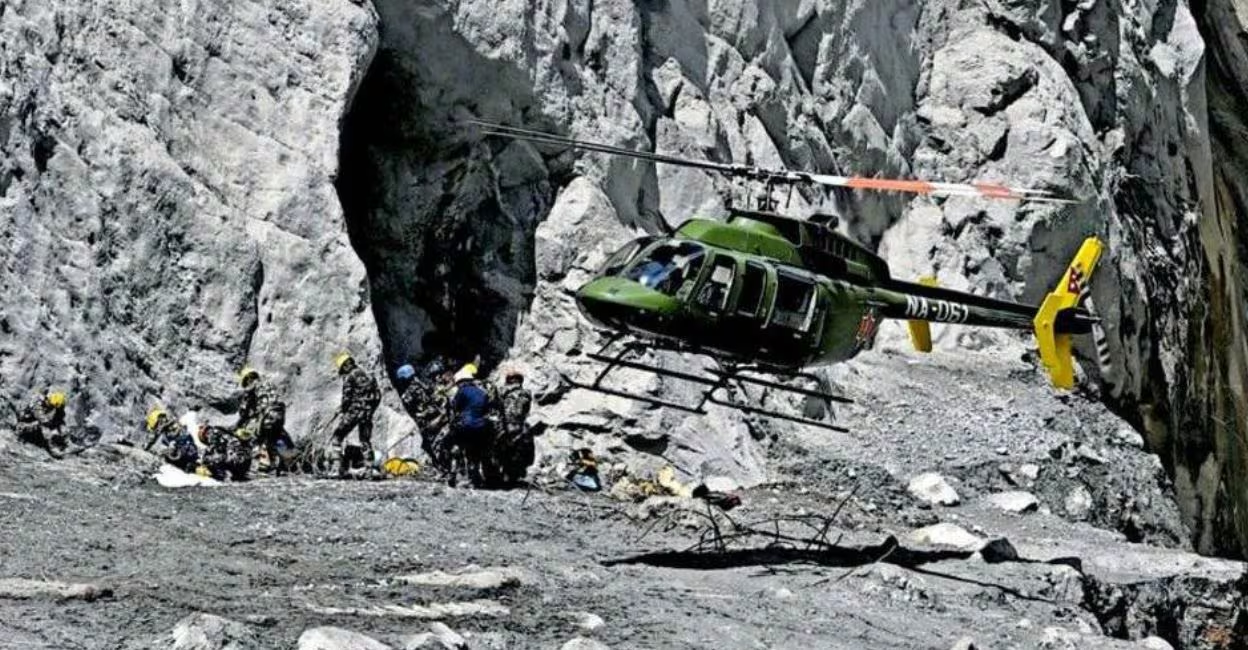
Among those missing in the floods are six Malayalis who were part of a 34-member Kailash Mansarovar pilgrimage group. The last mobile phone location of members of the group was traced to Goljung in Rasuwa district. Relatives of the missing pilgrims have urged rescue teams to focus their search on the area.
Fate of missing Indians remains uncertain
The Indian embassy is yet to provide a clear count of Indians missing in the Nepal floods. While officials provided updates during the first few days of the disaster, no fresh figures have been released in the past two days.
According to figures from the Ministry of External Affairs, 163 Indians have been rescued, while 151 crossed into China after completing their Mansarovar pilgrimage. However, there is still no clarity on the number of Indians missing in Nepal or those undergoing treatment.
The authorities have issued guidelines on the details relatives must submit to seek the release of victims’ bodies. The Indian embassy has asked them to check photographs and details of deceased persons uploaded on the Nepal Police website. If they identify a missing person, they must contact the authorities and submit the required documents along with DNA samples. Further procedures, including the handing over of the body, will begin once the samples are examined.
Meanwhile, a tunnel inspection team from India is also assisting in rescue operations at the Chilime, Trishuli 1, Trishuli A and Trishuli B tunnels.
[ad_2]
Source link