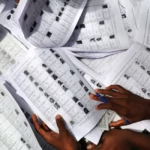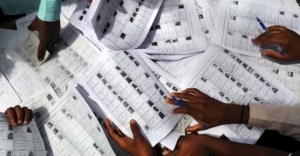


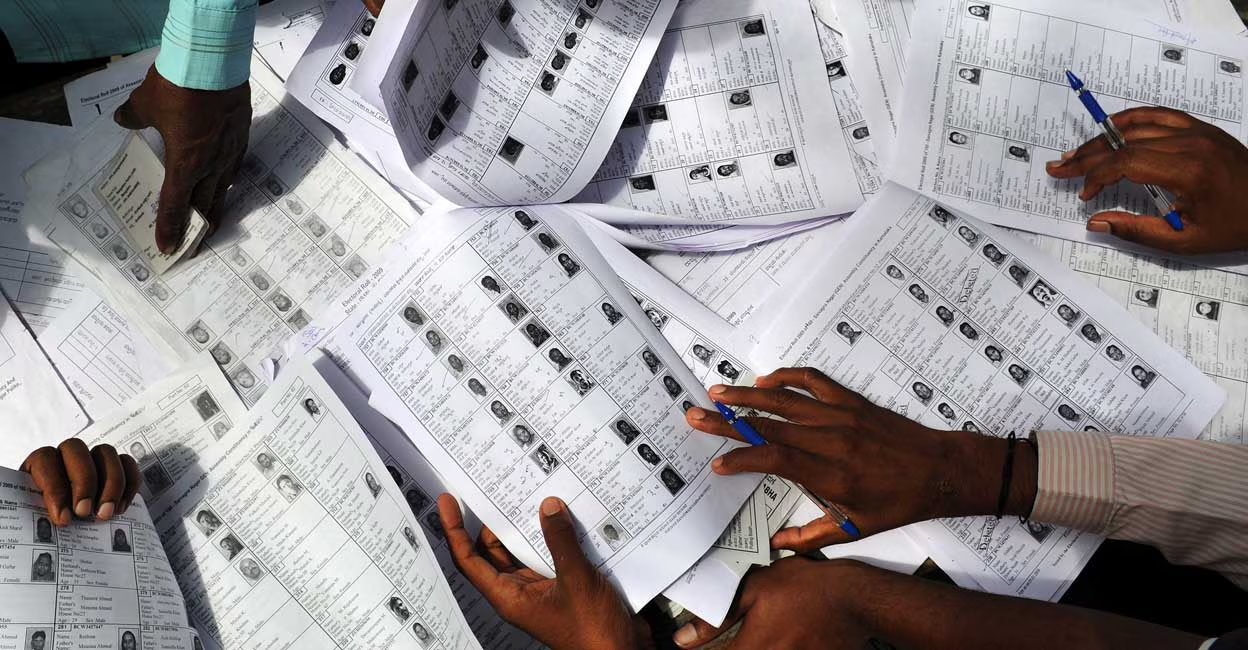
New Delhi: Administrative forms used by the Election Commission of India (ECI) to maintain electoral rolls have recently landed at the centre of intense political debate and legal scrutiny. Over the past few months, Forms 6, 7, and 8, the primary statutory tools for voter enrolment, deletion, and details modification have triggered growing controversy across multiple states.
While the Centre holds the authority to amend these forms under the Electoral Registration Rules subject to parliamentary approval, recent procedural shifts and alleged misuse by political operatives have raised serious concerns among electors and courts alike.
Form 6: Registration of new voters
Form 6 is designated for Indian citizens aged 18 and above seeking to enrol as new voters on the electoral roll. The process became controversial when instructions were issued requiring applicants in states undergoing Special Summary Revision (SIR) to submit an additional self-declaration affidavit alongside Form 6. Election Commissioners SS Sandhu and Vivek Joshi reportedly objected to this requirement, pointing out that it effectively altered statutory rules. Following pushback, the ECI clarified that in states where SIR has been completed, new voters need only submit Form 6 without any extra affidavit.
Form 7: Objections and name deletions
Form 7 is intended for objecting to a proposed inclusion or requesting the deletion of an existing name from the voter list. Serious allegations surfaced in Karnataka, Telangana, and West Bengal, where opposition parties accused Booth Level Agents (BLAs) affiliated with the BJP of submitting bulk Form 7 applications to systematically purge Muslim voters. Police in Karnataka and Telangana subsequently arrested several BLAs in connection with these claims. Because these bulk submissions took place after the publication of draft SIR rolls, affected citizens only discovered their names had been deleted when the final lists were published, leaving them no opportunity to be heard.
Form 8: Corrections and address changes
Form 8 allows voters to rectify existing particulars on the roll, including names, photographs, age, address, or disability status. In the Santa Cruz constituency of Goa, a family of six who relocated within the same constituency filed Form 8 to update their residential address. However, their names were omitted entirely from the final SIR list. When election officials advised them to re-apply as fresh voters using Form 6, the family approached the Bombay High Court, which sharply questioned why long-standing electors were being instructed to register anew.