

[ad_1]
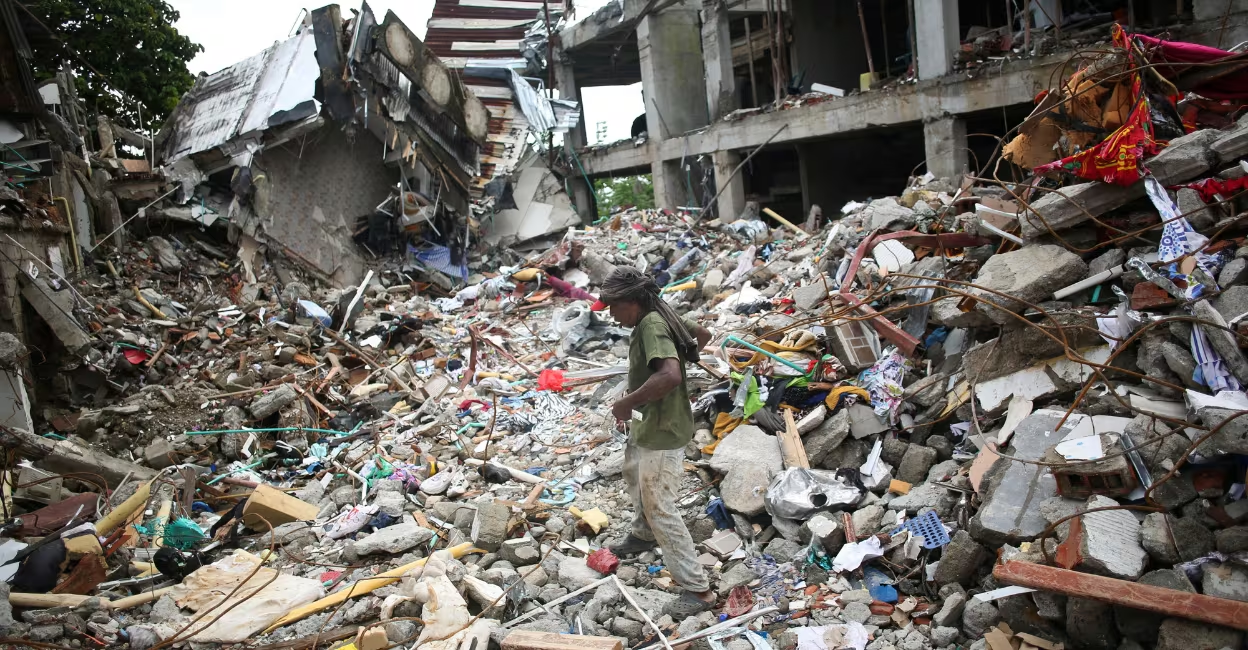
Colombia: Rescuers in Colombia raced to free survivors still trapped under the rubble on Friday, four days after one of the strongest earthquakes to hit the Andean nation in decades left hundreds of people dead or missing.
In Cali, Colombia’s third-largest city, rescue workers shifted shattered concrete after detecting sounds from a collapsed residential block early in the morning, suggesting people may still be alive – a rare sign of hope as the emergency response shifted to the grim task of accounting for the missing.
“We’ll keep going as long as God permits, as long as we have the strength,” said 67-year-old Julio Cesar Pineda, a volunteer who grabbed his gloves and hard hat to join the rescue efforts when the wall of his Pereira home fell down.
Venezuelan rescuers who arrived in Pereira, deep in Colombia’s coffee-growing region, after searching for survivors from the devastating quakes that hit their country’s Caribbean coast just seven weeks ago, told Reuters they still had hope and had found people alive as many as 10 days later.
Efforts in the city concentrated on a collapsed hotel that rescue workers believed might still hold survivors – including Juan Felipe Giraldo, 24, who was set to get married that weekend. His father was at the site from Monday night, waiting for news. His body was recovered from the rubble later on Friday, his family confirmed. He leaves behind a 2-year-old son.
Elsewhere in Pereira, authorities were assessing the possible relocation of hundreds of families from a makeshift shelter in La Libertad park, Caracol TV reported, as several nearby buildings were deemed at risk of collapse. Several people were unwilling to move without their relatives knowing their whereabouts. They included many children, as well as older people and people with disabilities.
Volunteers combed the rubble for personal items such as photo albums, letters and jewelry, to keep them safe until their owners are found. Aid workers called for more daily necessities such as diapers, pet food and medicine.
Authorities said on Friday that 287 people had been killed and nearly 4,000 injured. Nearly 400 others were still missing. Cali and Pereira accounted for over two-thirds of those killed, and more than half the injured were in major cities.
The 7.4-magnitude quake struck shortly after 7:30 a.m. on Monday, with its epicenter in San Jose del Palmar in the province of Choco. It toppled apartment blocks and damaged homes, schools and hospitals across western Colombia, from Cali and Pereira to the Pacific port of Buenaventura.
Tens of thousands of homes were damaged and many destroyed, according to government figures, underlining the scale of a disaster that has left many Colombians sleeping in shelters or outside unsafe buildings.
As of Friday morning, operations had resumed in all but one airport.
Meanwhile, authorities have recorded scores of aftershocks, adding to the danger for rescuers combing through unstable debris and for families reluctant to return to damaged homes.
The head of Colombia’s Camacol construction association, Guillermo Herrera, said though it was too early to confirm, initial reports suggested many buildings that collapsed were old and likely built before seismic codes were modernized.
The disaster is shaping up as the first major test for President Abelardo De La Espriella, a political newcomer who took office just days before the quake. He has faced criticism for his initial handling of the response, such as not accepting certain countries’ offers of foreign rescue teams. The government said it was focusing on receiving material supplies and later accepted teams from some countries, including the U.S. and Israel.
Elected in a polarizing vote on a platform of tougher security and austerity measures, the right-wing president made flying visits to affected cities and towns on Friday.
Speaking in Quibdo, the capital of Choco, Colombia’s poorest province, De La Espriella vowed that reconstruction would happen regardless of political or ideological alignment, and said long-neglected communities should receive more investment.
“We are all rebuilding Colombia together,” he said.
[ad_2]
Source link