

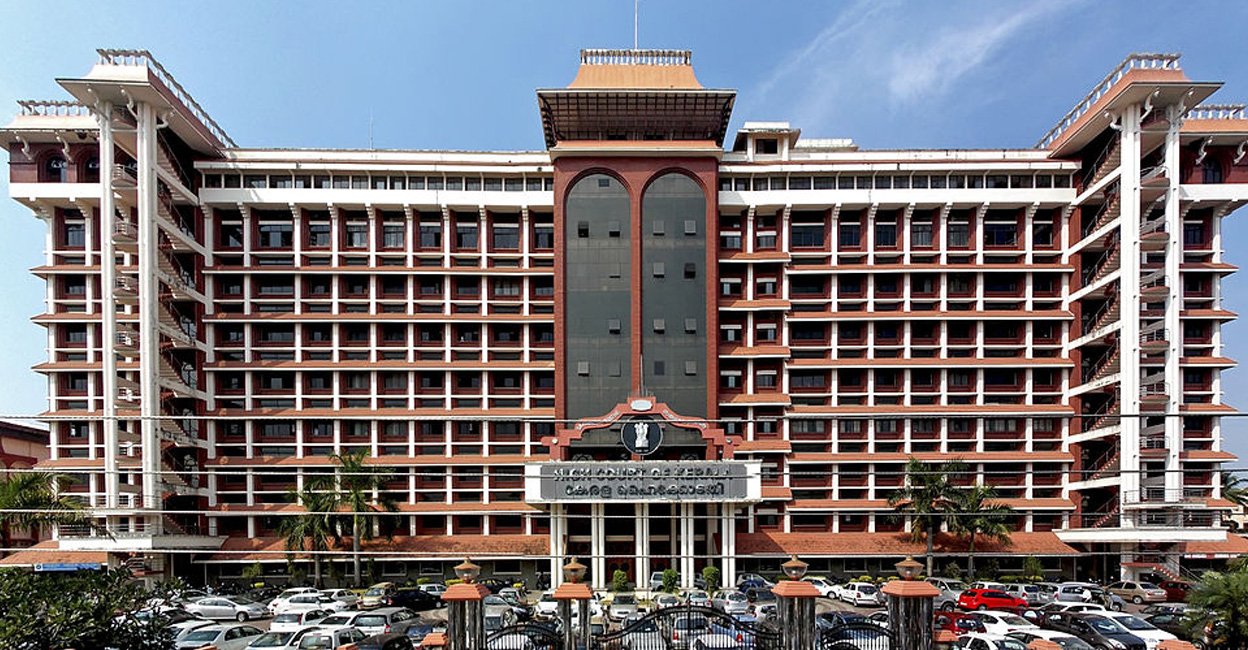
The Kerala High Court on Wednesday granted the state government three weeks to file its response to four public interest litigations (PILs) challenging the constitution of the Kerala State Waqf Board.
The order was passed by a division bench comprising Chief Justice Soumen Sen and Justice Syam Kumar V M. The High Court had earlier sought the state’s response in a similar petition filed by BJP leader Shone George.
The bench also heard advocate Lakshmi Sreedhar, appearing for one of the petitioners. She submitted that although the Board had not been properly constituted, it continued to function and pass orders, which could have adverse consequences. “We will look into it. If it is without jurisdiction, it will be annulled,” Chief Justice Sen orally observed.
All four petitions challenge the exclusion of non-Muslim members from the Board, contending that the amended Waqf Act mandates the appointment of two non-Muslim members.
One of the petitioners, ACTS, a registered charitable trust that says it works to protect the interests of Christians in Kerala and has been actively involved in the Munambam land dispute, filed its PIL through advocate Joseph Joy.
In its petition, ACTS contended that the Board had been “improperly constituted” as the statutory requirement of appointing two non-Muslim members had not been fulfilled. It further alleged that none of the nominated members belonged to the Shia community or other backward Muslim communities, as required under the amended provisions of the Act.
The petition also claimed there was no representation from the Bohra and Aghakhani communities, that the Mutawalli member was selected without considering the annual income of the waqf concerned, and that the member nominated as an eminent Islamic scholar was appointed without assessing his scholastic qualifications.
The PIL argued that respondents four to eleven had been illegally nominated and therefore had no authority to function as members of the Waqf Board. It alleged that the State government’s failure to cancel the appointments amounted to a dereliction of duty and sought a direction to issue a fresh notification constituting the Board in accordance with the law within a time frame fixed by the court.
The petition also challenged the Board’s decision to upload details of around 404 acres of disputed coastal land in Munambam to the Unified Waqf Management, Empowerment, Efficiency and Development (UMEED) portal.
According to the petition, the disputed land comprises around 404 acres where more than 600 predominantly Latin Catholic Christian and Hindu families face potential displacement. It argued that since the Waqf Board is a quasi-judicial body responsible for adjudicating disputes relating to waqf properties, an improperly constituted Board cannot be expected to render impartial decisions in matters involving properties occupied by Christians and Hindus.
The petition sought to set aside the government orders constituting the Board and direct the State government to reconstitute it in accordance with the law. As an interim relief, ACTS requested the High Court to suspend the functioning of the present Waqf Board until a legally constituted Board is appointed.