
[ad_1]
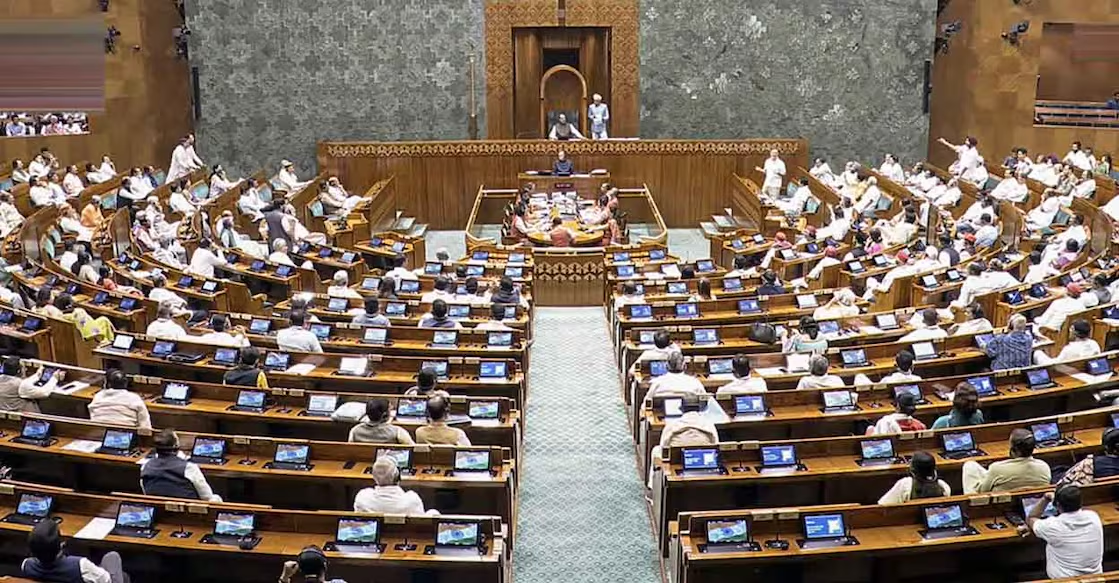
Leader of Opposition in the Lok Sabha Rahul Gandhi speaks in the House during the Monsoon session of Parliament, in New Delhi, Wednesday, July 29, 2026. Photo: Sansad TV via PTI
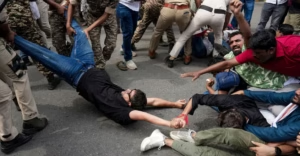
New Delhi: The Lok Sabha on Wednesday passed the Public Examinations (Prevention of Unfair Means) Amendment Bill, 2026, strengthening India’s anti-paper leak law with tougher penalties, fast-track trials and time-bound investigations. The Bill was cleared amid sloganeering by Opposition members during a debate dominated by the recent NEET paper leak controversy and nationwide student protests.
The amendment, introduced by Union Minister Jitendra Singh on July 27, comes days after the resignation of Union Education Minister Dharmendra Pradhan following weeks of protests led by the Cockroach Janta Party (CJP) over alleged irregularities in the NEET examination.
Speaking during the debate, Singh said the government had acted swiftly after the NEET paper leak controversy and that 52 FIRs had been registered since the anti-paper leak law came into force in 2024. He said the amendment reflected the government’s willingness to strengthen the law based on experience.
What changes under the new law?
The amendment seeks to speed up investigations and trials while introducing harsher punishment for those involved in examination malpractices.
Special fast-track courts
- State governments and Union Territory administrations can designate Sessions Courts as Special Fast Track Courts to hear paper leak cases.
- Trials must proceed on a day-to-day basis and be completed within three months of filing the chargesheet.
Time-bound investigations
- Investigations under the Act must be completed within two months.
- The Centre can constitute Special Task Forces to investigate offences under the law.
Special public prosecutors
States and UTs can appoint one or more Special Public Prosecutors to conduct cases under the Act.
Appeals
Appeals against judgments will be heard by a two-judge bench of the High Court and disposed of within three months of admission.
Stricter punishment
- Individuals found guilty of paper leaks or other unfair means will face five to 10 years’ imprisonment and a fine of up to ₹50 lakh.
- Organised crimes related to paper leaks will attract a minimum sentence of seven years and a fine of up to ₹10 crore.
The original Public Examinations (Prevention of Unfair Means) Act, 2024 was enacted after a series of paper leak controversies to curb malpractice in examinations conducted by agencies such as the Union Public Service Commission (UPSC), Staff Selection Commission (SSC), National Testing Agency (NTA), railway recruitment boards and banking recruitment bodies. The amendment aims to make enforcement faster and more stringent in the wake of the NEET controversy.
3d3flpbivionla6g8klbacmaf4 onmanorama-topic-general-topics-78-student-protests onmanorama-topic-general-topics-24-lok-sabha onmanorama-topic-general-topics-28-neet pvcpsncjsbirpol5hlpto72ik-list q8g0icilk3njbmobpf0gsge7f-list onmanorama-topic-general-topics-76-explainer onmanorama-topic-destination-4-india
[ad_2]
Source link