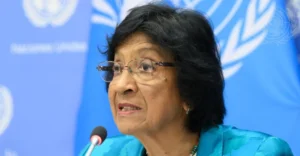


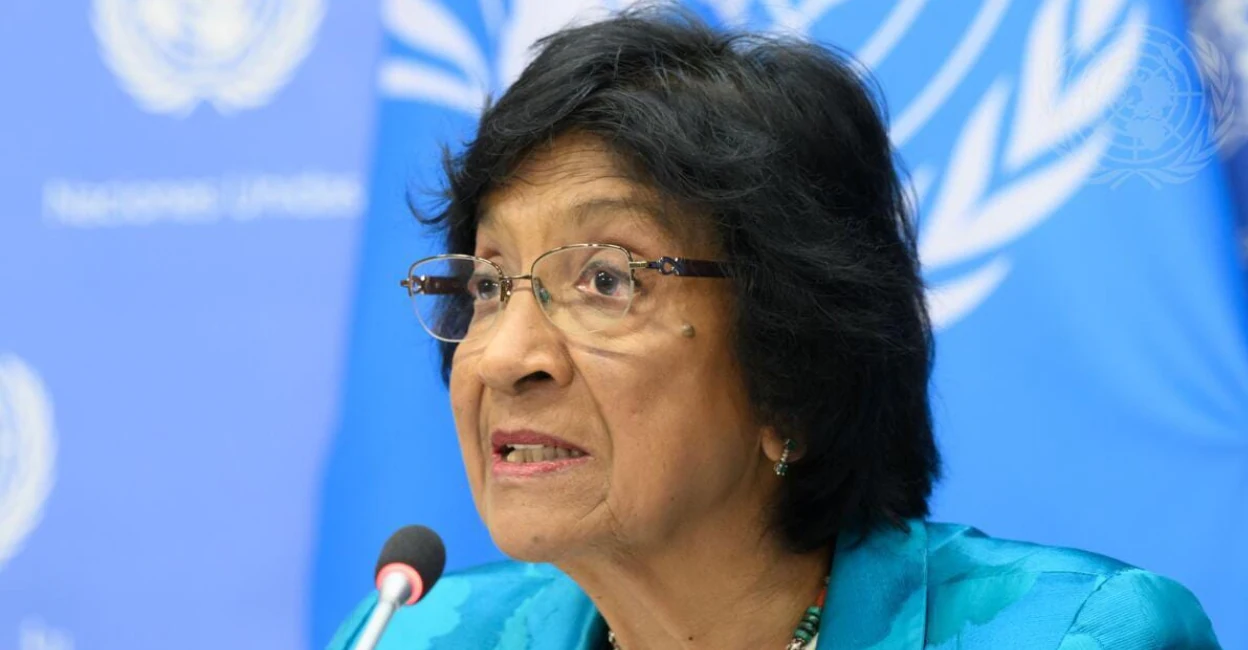
South African judge and Indian origin Navanethem “Navi” Pillay won the Nobel Peace Prize on Friday “for her efforts to promote peace and international law,” with the Nobel Committee recognising her role in advancing the prosecution of war crimes, crimes against humanity and genocide.
Pillay, who was born into a family of Indian Tamil origin in Durban, South Africa, during the apartheid era, has spent much of her career confronting discrimination and advancing universal legal principles.
“A common thread runs from her early work defending Nelson Mandela and others who stood up against apartheid to her service as a judge in some of the key international court cases of our time,” the committee said.
The Nobel Committee said Pillay had, with exceptional courage and integrity, helped advance a more comprehensive global legal order. Her career has spanned the South African judiciary, international criminal tribunals and the United Nations.
A lawyer and legal pioneer, Pillay began her career challenging the structural discrimination, segregation and exclusion imposed under apartheid. Her early work included defending Nelson Mandela and others who opposed the system.
She later served as a judge on South Africa’s High Court, the International Criminal Tribunal for Rwanda and the International Criminal Court, handling cases that helped shape the application of international law.
Pillay also served as the United Nations High Commissioner for Human Rights. Until recently, she chaired the UN Independent International Commission of Inquiry on the Occupied Palestinian Territory.
She is currently a judge at the International Court of Justice in the case in which Myanmar stands accused of genocide.
The Nobel Committee credited Pillay with significantly expanding the reach and impact of international law. Her work, it said, reflects a longstanding commitment to universal legal principles and a strong moral compass.
The committee observed that Pillay has held states and national leaders accountable while offering hope to victims of violence and conflict. Her contributions to international justice include helping establish that rape and sexual violence can constitute crimes against humanity and acts of genocide. She also played a key role in a landmark case in which a defendant was convicted of direct and public incitement to commit genocide through propaganda.
In announcing the award, the committee underscored the importance of international law at a time when the world is plagued by wars and conflicts. Describing it as an “absolute necessity”, the committee said the rule of law, both national and international, was essential to maintaining peace and resolving conflicts without violence. “Peace requires justice,” it said.